

Study Abroad in Japan

Choose Your Program

Academic Year Programs

Live with a host family and attend a local high school in Japan. Experience the culture, language, and daily life of Japanese teens while building lifelong connections.

2027 Spring Year
$18,195Age Eligibility Born Apr 2, 2009 – Apr 1, 2012
  • ✈️Depart: Late March
  • ✈️Return: Early January
  • ✓Host family placement
  • ✓School placement
  • ✓Orientations
  • ✓Language training course in country
  • ✓Airport transfers
  • ✓Domestic & international travel
  • ✓YFU Japan on-program support
  • ✓Comprehensive insurance
  • ⏰ Application deadline: Sep 15, 2026

Academic Year Program Details

School

Students will typically be placed in the first or second year at a Japanese high school. Most schools are quite large, averaging 500 to 1,000 students. You will likely study subjects like Japanese classics or contemporary Japanese language and you may also attend elective classes that include subjects such as art and calligraphy. You may attend club activities after school such as karate or judo.

Japanese schools are generally conservative and therefore the dress code in Japan may be stricter than you are used to. In Japanese schools, students do not have unnaturally dyed hair or eccentric hairstyles. Piercings, earrings, necklaces, and rings are not allowed in schools. Students cannot wear makeup, or perfume, or have visible tattoos. Female students cannot wear skirts above the knees or high heels. Male students should not have a beard or long hair. Schools in Japan almost always require uniforms. The cost of a school uniform and language training is included in the program tuition. All students will be placed in the appropriate language course as a result of a level check test at the arrival orientation.

Please note: Students may not be able to receive a transcript or a record of grades. Some schools can issue a certificate of attendance. Placement in a particular grade level, credit, or graduation cannot be guaranteed.

Orientations

All students applying for the year program must be available for a mandatory National Pre-Departure Orientation which usually takes place in early-mid December. This orientation is a required part of the program aimed at preparing students for their experience overseas.

Upon arrival in Japan, students will participate in a 5-day orientation in Tokyo. Students will also attend a regional mid-year and a regional re-entry orientation before returning home. All orientation costs are included in program tuition.

Language

Japanese. One year of previous language study is required for long-term Japan programs. A Japanese correspondence course is included in program tuition for long-term program participants.


Semester Programs

Live with a host family and attend a local high school in Japan. Experience the culture, language, and daily life of Japanese teens while building lifelong connections.

2027 Fall Semester
$17,095Age Eligibility Born Apr 2, 2009 – Apr 1, 2012
  • ✈️Depart: Mid August
  • ✈️Return: Early January
  • ✓Host family placement
  • ✓School placement
  • ✓Orientations
  • ✓Language training course in country
  • ✓Airport transfers
  • ✓Domestic & international travel
  • ✓YFU Japan on-program support
  • ✓Comprehensive insurance
  • ⏰ Application deadline: Feb 15, 2027
2027 Spring Semester
$17,095Age Eligibility Born Apr 2, 2009 – Apr 1, 2012
  • ✈️Depart: Late March
  • ✈️Return: Early August
  • ✓Host family placement
  • ✓School placement
  • ✓Orientations
  • ✓Language training course in country
  • ✓Airport transfers
  • ✓Domestic & international travel
  • ✓YFU Japan on-program support
  • ✓Comprehensive insurance
  • ⏰ Application deadline: Sep 15, 2026

Semester Program Details

School

Students will typically be placed in the first or second year at a Japanese high school. Most schools are quite large, averaging 500 to 1,000 students. You will likely study subjects like Japanese classics or contemporary Japanese language and you may also attend elective classes that include subjects such as art and calligraphy. You may attend club activities after school such as karate or judo.

Japanese schools are generally conservative and therefore the dress code in Japan may be stricter than you are used to. In Japanese schools, students do not have unnaturally dyed hair or eccentric hairstyles. Piercings, earrings, necklaces, and rings are not allowed in schools. Students cannot wear makeup, or perfume, or have visible tattoos. Female students cannot wear skirts above the knees or high heels. Male students should not have a beard or long hair. Schools in Japan almost always require uniforms. The cost of a school uniform and language training is included in the program tuition. All students will be placed in the appropriate language course as a result of a level check test at the arrival orientation.

Please note: Students may not be able to receive a transcript or a record of grades. Some schools can issue a certificate of attendance. Placement in a particular grade level, credit, or graduation cannot be guaranteed.

Orientations

All students applying for the year program must be available for a mandatory National Pre-Departure Orientation which usually takes place in early-mid December. This orientation is a required part of the program aimed at preparing students for their experience overseas.

Upon arrival in Japan, students will participate in an arrival orientation in Tokyo. All orientation costs are included in program tuition.

Language

Japanese. One year of previous language study is required for Japan’s long-term programs. A Japanese correspondence course is included in program tuition for long-term program participants.

Summer Programs

Live with a host family and attend a local high school in Japan. Experience the culture, language, and daily life of Japanese teens while building lifelong connections.

2027 Summer
$10,895Age Eligibility Born Apr 2, 2009 – Apr 1, 2012
  • ✈️Depart: Mid June
  • ✈️Return: Early August
  • ✓Host family placement
  • ✓School placement for 1 week minimum
  • ✓Orientations
  • ✓Airport transfers
  • ✓Domestic & international travel
  • ✓YFU Japan on-program support
  • ✓Comprehensive insurance
  • ⏰ Application deadline: Jan 15, 2027

Summer Program Details

Orientations

All students applying for the summer program must be available for a mandatory Japan Pre-Departure Orientation which takes place just prior to the departure date. This orientation is specifically designed for American students studying in Japan and covers cultural elements such as food, language, etiquette, and arts. It is a required part of the program to prepare students for their experience in Japan.

Language

Japanese. Previous language study is not required, however, students traveling to Japan for the summer program must start language training upon their acceptance.

Discover Japan

Japan comes to life when you arrive for your six-week stay with your host family. Attending traditional tea ceremonies, practicing martial arts, and visiting local summer festivals are just some of the activities  YFU students to Japan may experience during their summer exchange. School is in session during our summer program in Japan so students may attend classes at their host high schools for a short duration. Students may attend and audit classes but are not officially enrolled in the school during their stay in Japan. Students will not receive report cards or evaluations of their performance.

Study Abroad Participants
What to Expect

Konnichiwa! If you’re looking for a fascinating culture with a rich history, beautiful scenery, and welcoming families and friends, then Japan may be just the place for you!

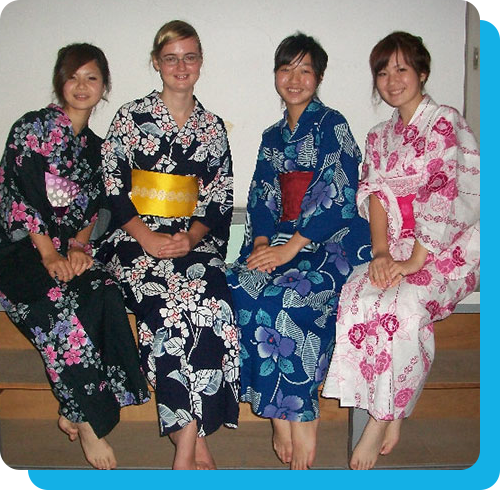
Come to the birthplace of manga, anime, origami, kimonos, and samurai, where you can learn firsthand about all these popular fixtures of Japanese culture that mesh Japan’s history with its present-day influences. You will have the chance to attend performances of traditional theatre or enjoy a night of modern-day karaoke. The Japanese enjoy newer sports like snowboarding and baseball, as well as traditional sports like sumo wrestling and kendo (fencing).

One major element of the Japanese experience is school, where you will take classes with Japanese students in various subjects and participate in extracurricular activities like martial arts. Food in Japan will offer a variety of new dishes ranging from sushi, rice bowls, and different types of noodles, to dishes like chashu and moyashi.

In Japan, you will find a truly unique culture of ancient history with a modern twist. By going on a YFU program to Japan, your experience will open up endless opportunities for your future!

YFU USA is proud to send over 200 American students on cultural exchange with a full or partial scholarship each year. Financial assistance may be in the form of a merit-based scholarship, need-based financial aid, or Legacy Grant for students previously involved in the YFU Community. Scholarships may vary in deadline, requirements, and eligibility. To learn more, please visit our Scholarships Page to find details on the following scholarships eligible for Japan:

YFU Legacy Grant
YFU Financial Aid Fund
Japan Summer Program
Employer Based Scholarships

Visa Information
Information regarding visas and other immigration processes will be provided upon enrollment.

Additional Costs
Students are responsible for paying any school fees (including books, transportation, and optional school trips), as well as all fees related to obtaining visas. Year and semester students are responsible to pay for an additional national health insurance fee upon arrival. Program tuition does not include personal spending money.

Students to Japan may be placed with a host family anywhere in the country, including the Okinawa Islands, in either a rural or suburban setting. Students are normally not placed in large urban centers, but often are placed in small towns, where they have opportunities to become an integral part of their host communities!

YFU Japan’s Participant Eligibility Guidelines

Dietary Requirements: Please do note that for Japan, dietary restrictions generally cannot be accommodated. Host families expect that students will eat all foods on program, including meats/fish and nuts. We work solely with volunteer host families, and culturally we find that it is very difficult to avoid these foods in Japanese cuisine and our host families are not able to accommodate special dietary restrictions or allergies. Safety is our main concern. It can also cause tensions between students and their host families if they refuse food that was offered, even if it was of course not the student’s intent to offend. Please let us know if there are any exceptions to your dietary restriction or if it is due to an allergy so that we may provide the additional information to YFU Japan staff when they are making their final selections for the program.

Schooling Requirements: Students who have graduated, are homeschooled, or enrolled in online schooling are not eligible for the Japan program due to the regulations and structure of the Japanese education system.

Only your high school can agree to accept your international credits upon your return home. YFU does not guarantee credit transfers from your international school to your local high school for semester or year programs. All that being said, students are often able to stay on track when they’re proactive with their American high school and guidance counselors before program departure. To help you along, you can find additional information on our School Credit Guideline document.

Medication Restrictions: All medications containing stimulants are prohibited by YFU Japan, including those for ADD/ADHD. 

Legal Compliance: Smoking is illegal for individuals under 20 in Japan. Any violation of this law, or any other Japanese law, may lead to immediate dismissal from the program and return to the United States.

East and West. Tradition and innovation. Industry and family. Shinkansen (bullet train) and tatami (straw mats). As a YFU student in Japan, you’ll discover a land of contrasts.

Have questions or want to learn more about YFU Study Abroad Programs?

My exchange to Japan allowed me to look through the eyes of a culture very far from the one I knew. I’m still in contact with many of the friends I made and have made plans to visit a few of them in the future. My exchange abroad continues to influence my decisions in life

– James